
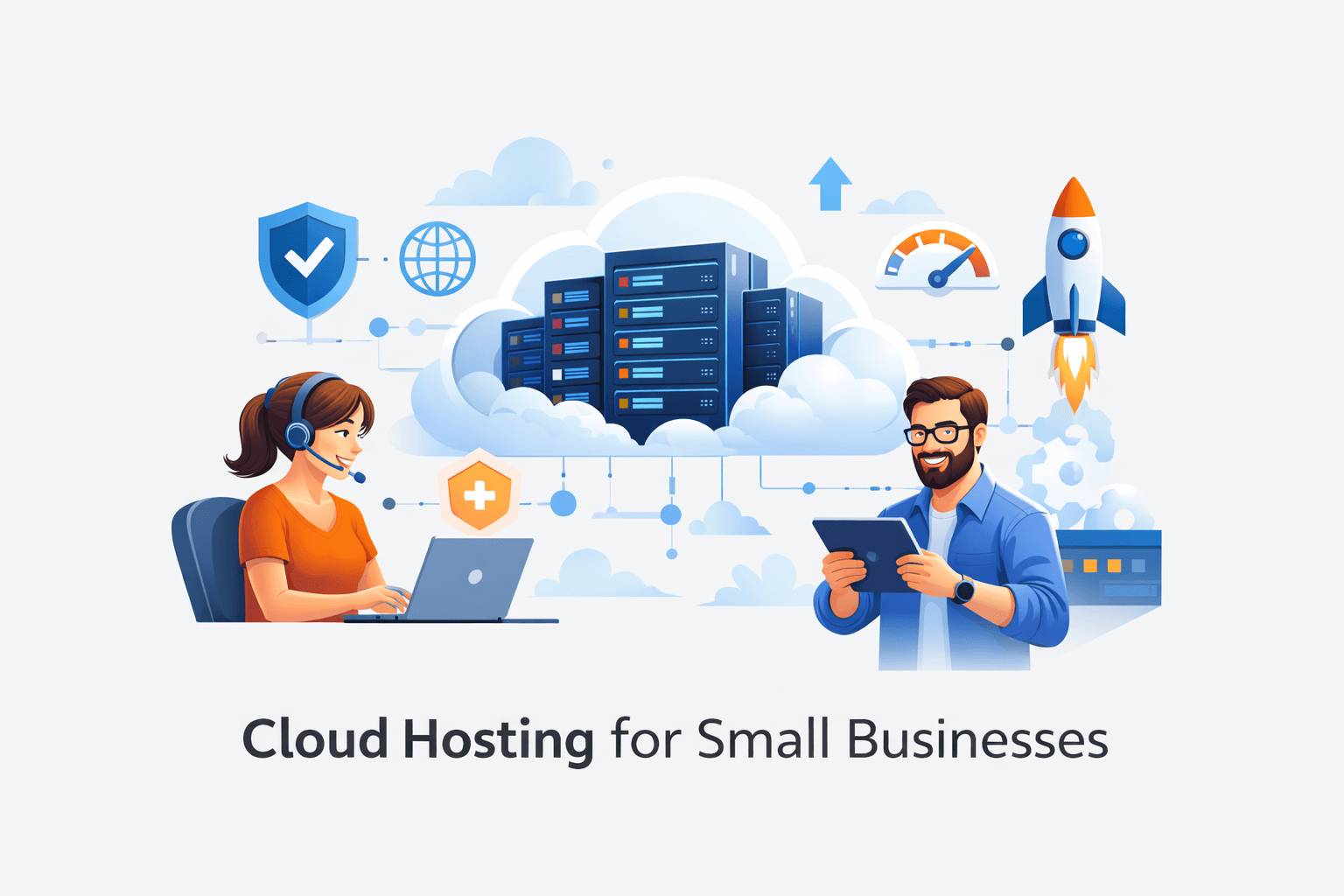
Cloud hosting has become the backbone of modern small businesses. Whether you’re running an e-commerce store, SaaS startup, agency website, or corporate portal, traditional shared hosting is no longer enough.
In this complete guide, we’ll break down:
- What cloud hosting is
- Why small businesses need it
- Key features to look for
- Pricing comparison
- Best cloud hosting providers in 2026
- How to choose the right one
Let’s dive in.
What Is Cloud Hosting?
Cloud hosting uses multiple interconnected servers to host your website or application instead of relying on a single physical server.
Unlike shared hosting:
- Resources are scalable
- Downtime risk is lower
- Performance is higher
- Traffic spikes are handled better
Instead of being limited to one machine, your website runs on a distributed cloud infrastructure.
Why Small Businesses Should Use Cloud Hosting in 2026
Small businesses today need:
- Fast website speed
- Security & data protection
- Scalability for growth
- Reliability during traffic spikes
Cloud hosting provides all of these.
Key Benefits:
1. Scalability
You can increase RAM, CPU, or storage without migrating servers.
2. Better Performance
Cloud servers use SSD/NVMe storage and optimized infrastructure.
3. High Uptime
Most cloud providers offer 99.9%+ uptime.
4. Security
Built-in firewalls, DDoS protection, and regular backups.
5. Pay-as-You-Go Pricing
You pay for what you use.
Cloud Hosting vs Shared Hosting for Small Business
| Feature | Shared Hosting | Cloud Hosting |
|---|---|---|
| Speed | Limited | High |
| Scalability | No | Yes |
| Security | Basic | Advanced |
| Traffic Handling | Limited | Excellent |
| Uptime | Moderate | Very High |
If your business depends on your website, cloud hosting is the smarter long-term choice.
How Much Does Cloud Hosting Cost in 2026?
For small businesses:
- Entry-level cloud VPS: $5–$10/month
- Managed cloud hosting: $15–$30/month
- High-traffic cloud server: $40–$100/month
Cost depends on:
- CPU cores
- RAM
- Storage type
- Traffic usage
- Managed vs unmanaged
How to Choose the Best Cloud Hosting for Your Business
Ask yourself:
1. What is your traffic volume?
Low traffic → Basic VPS
High traffic → Scalable cloud plan
2. Do you need managed support?
Non-technical → Managed hosting
Technical team → Unmanaged VPS
3. What type of website?
- WordPress → Optimized cloud WP hosting
- E-commerce → High RAM + SSD
- SaaS → Scalable infrastructure
4. Budget?
Start small and scale gradually.
Best Cloud Hosting for Different Small Business Types
🛒 E-commerce Stores
Need:
- High uptime
- SSL
- DDoS protection
- Auto scaling
🧑💻 Agencies
Need:
- Multiple site hosting
- Snapshot backups
- Performance optimization
🚀 SaaS Startups
Need:
- Flexible scaling
- Global CDN
- Database optimization
Final Verdict: Which One Should You Choose?
If you are:
- Technical → DigitalOcean or Vultr
- Non-technical → Cloudways
- Enterprise level → AWS or Azure
- AI/Data heavy → Google Cloud
For most small businesses in 2026, a managed cloud VPS gives the best balance of performance, simplicity, and cost.
Is Cloud Hosting Worth It for Small Businesses?
Yes, absolutely.
Cloud hosting:
✔ Improves website speed
✔ Reduces downtime
✔ Supports business growth
✔ Protects data
✔ Handles traffic spikes
In 2026, it’s no longer optional for serious businesses.